First Page

Who we are
Get in Touch Trips Info
Printable docs and forms The Big Bass

An Amazon Overview
Regional Maps and Information
Tips and Needs for the Trips
Package Dates
On Line Reservations
 

CATCH & RELEASE


In most of the regions we'll be fishing is obligatory to release all fish catch. When releasing
a fish, the anglers are giving it the chance of being recycled to reproduce, increasing the populations and it can be hooked again by another anglers. The releasing of a big fish also results in the increase of the average size of the captured species. More and more concerned sport fishermen are catching and releasing their fishes even in places where there are no laws supporting it.  This philosophy is a great effort for the environment preservation.


I E M A N J Á


Meet Iemanja Yacht, built exclusively to attend Sport Fishing Tourism. It's a 75 feet long and 20 feet wide hotel boat to host you with uncompromising luxury, and  all comfort and safety on this adventure into the Amazon jungle. See more...


V I D E O


E xplosive action - Giant Peacock Bass at Youtube.
Watch the video


THE Amazon Rainforest

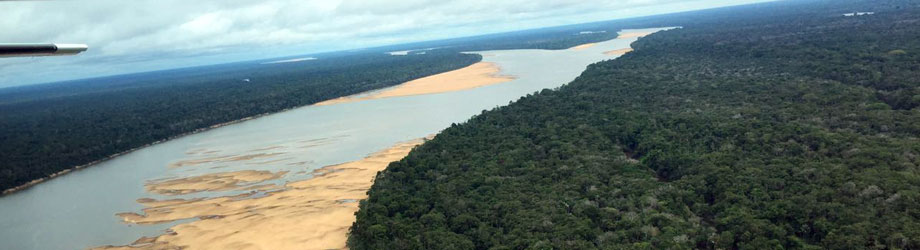
The Amazonian region occupies a total area of more than 7.5 million square kilometers, being part of the territory of nine countries: Brazil, Venezuela, Colombia, Peru, Bolivia, Ecuador, Surinam, Guiana and French Guiana .

The Amazonia has 3,54 million square kilometers of continuous forest-covered areas, the largest in the world. Paradoxically, however, it is a soil with low fertility: 78% of it is acid and difficult to use for agriculture. Biodiversity is also the largest in the world: while there are 4 to 25 tree species per hectare in North America, there are between 40 and 300 different tree species in the Amazon forest. There are more than 5,000 species of trees.

The volume of rain in the Amazon river basin is truly amazing: more than 15 trillion cubic meters per year. Of the overall rainfall, 48% evaporates, 52% flows to the rivers, and ultimately to the sea.

The rainforest ecosystem changes significantly this average: in its environment, only 25% is evaporated and 25% goes to the rivers: the major part is retained in the forest itself.
 

THE FAUNA

The Amazon forest may be considered a kind of "ecological filter" for carbon dioxide (CO2) in the atmosphere, because the plants in the forest absorb more CO2 than they release.

Unfortunately, the accelerated human occupation of the Amazonia is causing a series of environmental problems, due to the amount of destruction of its original ecosystem.

 It has been estimated that approximately 12,5% of the original forest cover, or 500,000 km2, has been deforested or burnt. Logging companies, miners in search of gold and other valuable metals and agricultural occupation are the main culprits. Although the destruction rates have decreased lately, it still continues at a worrying pace.

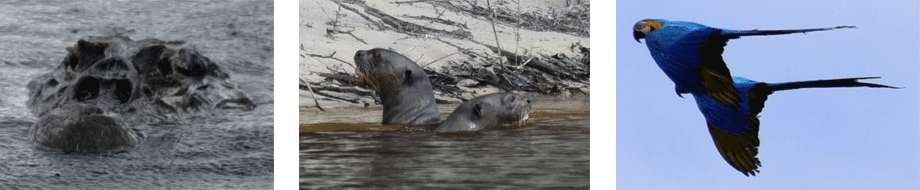
The Amazon forest is extraordinarily rich in all forms of animal life, from insects to mammals. A cubic meter of soil has 100 times more insects and worms there than in the Northern hemisphere. The gigantic volume of water and the mild temperatures make a kind of fertile incubator, too: there are more than 3,000 fish species in Amazon, representing 85% of all species living in South America, and 15% of the species in the world. However, only 40% of these species have been studied by scientists, and about 36 fish species are economically exploited.

The region has many astounding records in terms of fauna. It has more than 100 species of New World monkeys (the smallest one is no larger than a fountain pen; the largest is comparable to a chimpanzee), thousands of bird species, like the colorful macaws (arara s) and toucans (tucan os) and dozens of exotic and interesting animals such as capybaras (the largest rodent in the world), tree sloths, alligators ( jacarés), the feared spotted jaguar (onça), turtles and gigantic anacondas, which can reach up to 40 feet (12 meter long)
 

This region encompass a large area of undisturbed nature, the conservation of this area is critical. As a locally owned and operated company, we reinvest the money generated by our fishing tourism operations back into the local community. Furthermore, a significant portion of our revenue goes to fund research, conservation, and social development programs.


AMAZON PRINCE - COPYRIGHT © 2006
Amazon Prince Sportive Fishing Trips in the Amazon Forest - São Paulo - Brasil
Phone: (55 11) 9572-2163  / Fax: (55 11) 4702-6122
contact@amazonprince.com.br